
CSA Severe Weather Policy
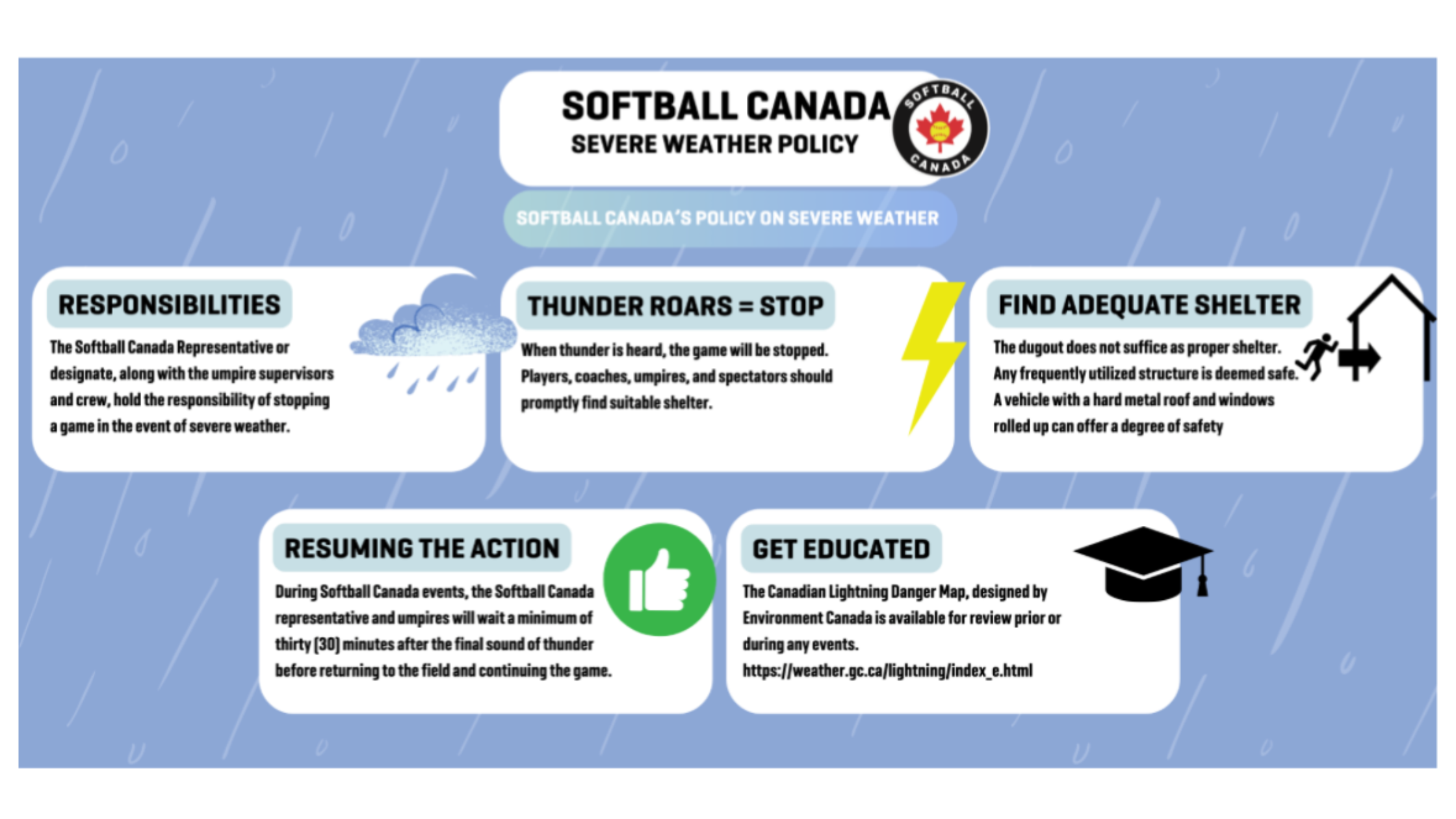
The Capital Softball Association follows the Softball Canada Severe Weather Policy which states that play (be that either practice or a game) can only resume 30 minutes after the most recent sound of thunder was heard. This policy has been in place since the inception of our league, and is enforced to ensure player safety is at the forefront of all decisions made.
If the event in question has an umpire on site, they will make the decision as to whether to postpone the game due to weather. If there is no umpire on site (ex: practice), then the head coach will be tasked with calling off practice in the presence of thunder/lightning in the area.
To learn more about Softball Canada’s Severe Weather Policy, please click here.
CSA Severe Heat Policy
While there is no unified heat policy for softball across the country, the Capital Softball Association has adopted the following stance on conducting practices/games during heat waves:
Introduction
To learn more about some of the risks of extreme heat, please review the following document:
https://www.canada.ca/en/health-canada/services/climate-change-health/extreme-heat.html
Individual Strategies for Reducing Risk of Heat Illness
To reduce the risk of heat illness, the following strategies are recommended to participants:
• Stay hydrated
• Use sunscreen
• Wear loose fitting, light coloured, breathable clothing
• Take frequent breaks
• Avoid direct sunlight, when possible
• Wearing sunglasses that have UVA and UVB protection
Monitoring Athletes
It is important to continually monitor athletes for symptoms of heat illness. Typical symptoms of heat illness include, but are not limited to:
• Flushed face
• Shortness of breath
• Dizziness
• Nausea
• Headache
• Extreme thirst
• Confusion or agitation
Recommended Adaptations to Team Activities
Temperature Under 29C
At this temperature range, adaptations to team activities are typically not required. Participants should consider the individual strategies listed in section 2.
Temperature from 30C to 35C
At this temperature range the following team adaptations are recommended:
• Consider reducing the length of warm-up; for example, cancelling batting practice
• Consider playing with a time limit
• If dugout areas are not shaded, consider creating shade for athletes with tents and tarps
Temperature from 35C to 39C
At this temperature range, the following team adaptations are recommended, in addition to those found in the sections above:
• Consider rescheduling activities for early morning or late evening when the temperature may be lower
• Consider playing under lights in the late evening when there is no direct sunlight
• Consider playing a single game instead of a doubleheader
• Consider scheduling umpires for only one game. In the case of a doubleheader with four umpires not available, consider having umpires work one game solo.
Temperature 40C Plus
At this temperature range, strong consideration should be given to cancelling activities.